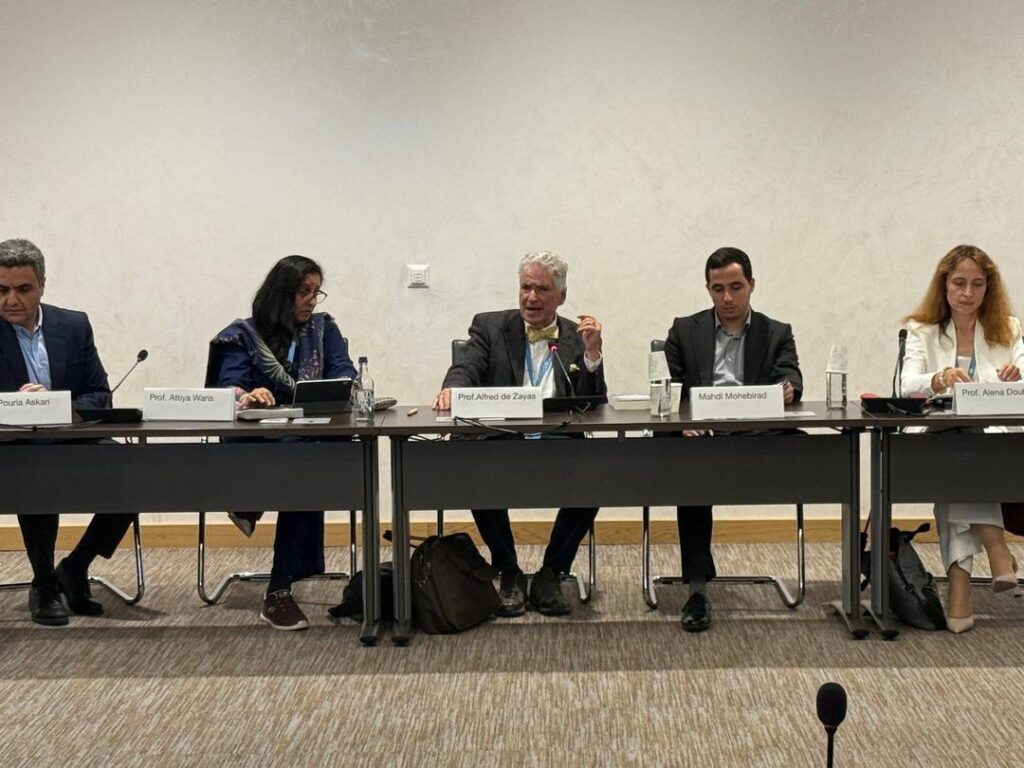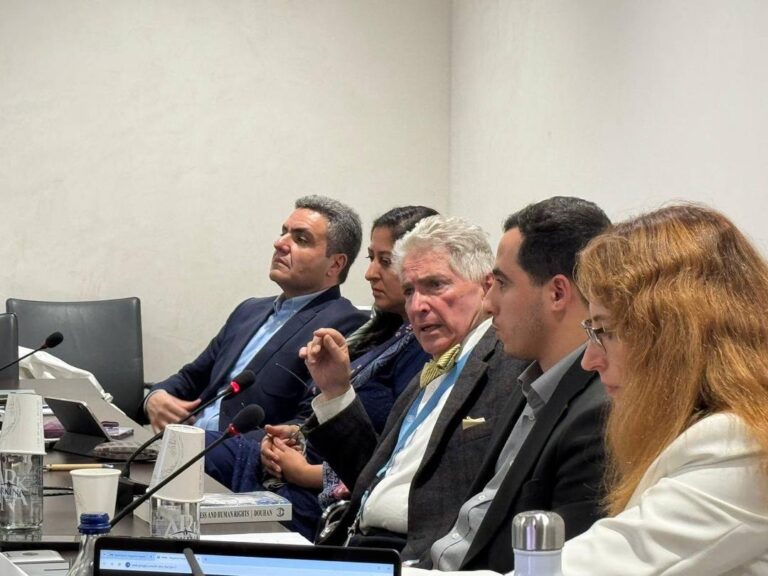
Held on the sidelines of the 60th session of the Human Rights Council, featuring three current and former UN rapporteurs; Side event examining the impacts of unilateral coercive measures during armed conflicts.
Geneva – On the sidelines of the 60th session of the United Nations Human Rights Council, a specialized panel titled “The Negative Impacts of Unilateral Coercive Measures During Armed Conflicts” was held at the UN European headquarters in Geneva.
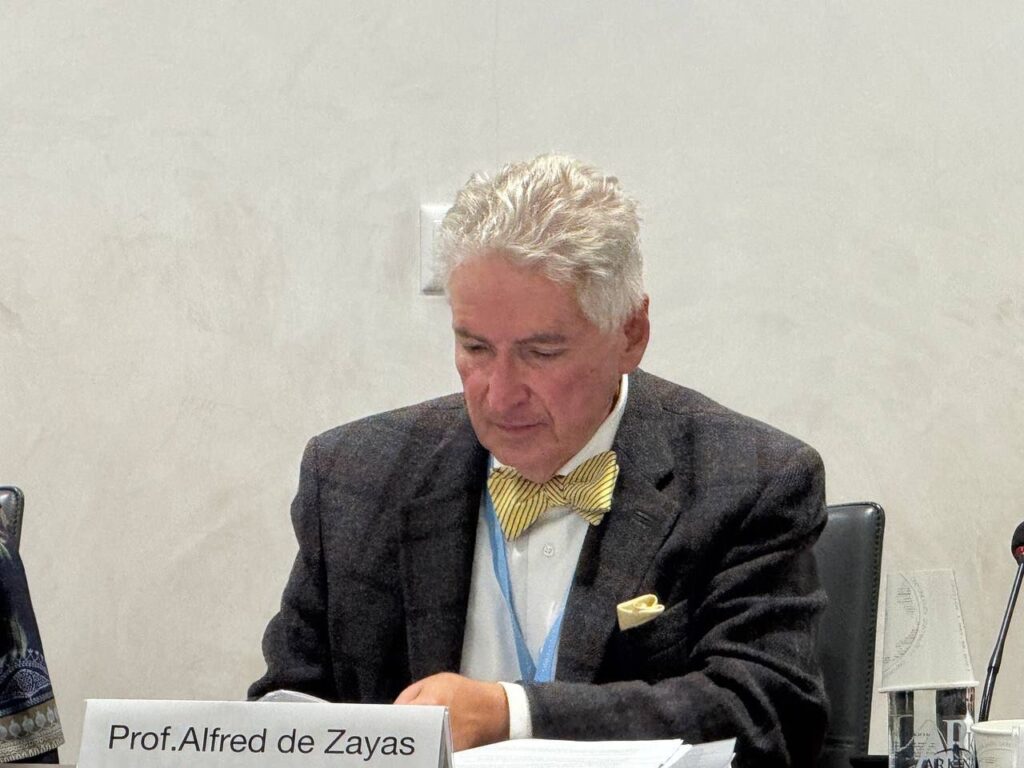
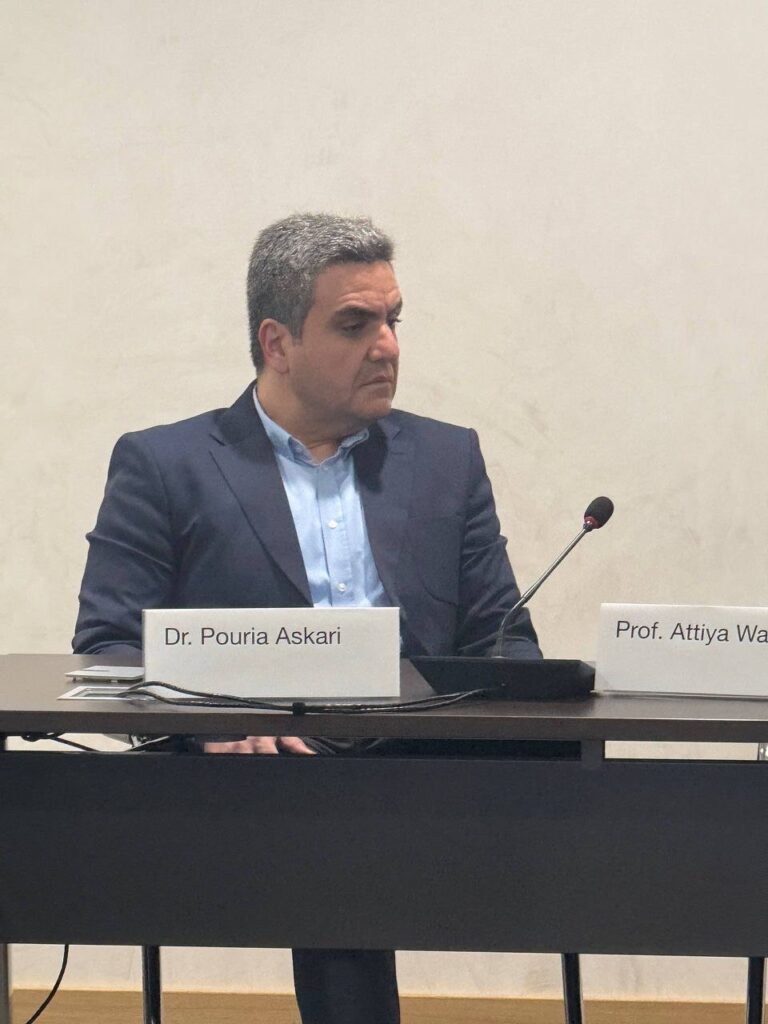
This session, initiated by the Organization for Defending Victims of Violence (ODVV), featured prominent figures including Professor Alena Douhan (UN Special Rapporteur on unilateral coercive measures), Professor Attiya Waris (UN Independent Expert on foreign debt and its effects on human rights), Dr. Pouriya Askari (Professor of International Law at Allameh Tabataba’i University), and Professor Alfred de Zayas (former UN Special Rapporteur on international order and Professor of International Law at the Geneva School of Diplomacy). The panel examined the legal, financial, and humanitarian consequences of these measures.
The session was moderated by Mehdi Mohebirad, a Ph.D. researcher in International Law at Allameh Tabataba’i University and the Director-General of the Organization for Defending Victims of Violence.
Emphasis on “Financing for Peace” and Warning Against the Weaponization of the Financial System
Professor Attiya Waris emphasized the necessity of shifting the perspective from “financing for war” to “financing for peace,” and she elaborated on her report to the UN General Assembly, which addresses issues such as investments, pension funds, illicit financial flows, public and private debt, and the tax system.
She stated that even seemingly peace-oriented institutions, like the Norwegian Pension Fund or large financial firms such as BlackRock and Vanguard, are in practice contributing to the continuation of wars. She stressed that the high return on investment in military industries has increased the incentive for investors to enter this field. According to her, the purchase of Israeli regime bonds in the state of Florida has not only led to economic stabilization but has also sent a message of political legitimacy to the regime engaged in war.
She also pointed to the history of taxation and its role in financing wars, warning that today, financial and monetary tools have become instruments of war. She concluded by warning against the “weaponization of the digital space and artificial intelligence,” calling for a serious international dialogue on this matter.
Legal Vacuum in Addressing Economic Coercive Measures
Dr. Pouriya Askari, Professor of International Law at Allameh Tabataba’i University, emphasized that while the resort to war is prohibited under international law, there is nonetheless no binding rule regarding unilateral coercive measures.
He added: “There is no specific treaty or convention to regulate the use of this type of economic coercion among states, and one can only refer to general principles such as the principle of non-intervention and human rights rules.”
He noted that international humanitarian law (IHL) is designed solely for situations of war, and citing it to condemn economic coercive measures in peacetime is legally challenging. Analyzing the UN Charter, he explained that Article 2(4) of the Charter only addresses the prohibition of the use of military force and is silent on economic force.
Askari described unilateral sanctions as a violation of the inherent right to self-defense, adding: “By preventing countries from accessing new technologies and vital tools, sanctions in fact violate both the rights of states and the rights of people.” He also raised the question of why, despite the catastrophic effects of sanctions, the UN Security Council has not seriously engaged in addressing this issue.
Sanctions as Collective Punishment; Hundreds of Thousands of Deaths as a Result of Sanctions
Professor Alfred de Zayas, the former UN Rapporteur on international order, referred to the concept of “collective punishment” in his remarks, deeming sanctions contrary to the fundamental principles of international law.
Citing reports by Jeffrey Sachs and Mark Weisbrot, he said that in just one year, over 40,000 people died in Venezuela due to sanctions, and this figure has reached hundreds of thousands in recent years.
He emphasized that targeting vital industries like oil and medicine effectively targets entire nations, calling sanctions a clear example of collective punishment. He stated that even widespread human death has not led to a change in the policies of sanctioning countries, as these actions are designed in line with ideological projects such as regime change.
De Zayas also criticized the lack of a binding mechanism to implement the recommendations of UN Special Rapporteurs, describing the UN structure as incapable of delivering justice. However, he stressed that despite its weaknesses, this structure remains the best platform for international follow-up. He concluded by calling sanctions “crimes against humanity” and criticized some human rights organizations, such as Amnesty International and Human Rights Watch, for supporting sanctions.
Alena Douhan: Sanctions Are Neither Legitimate nor Lawful; A Threat to Global Peace
Professor Alena Douhan, the UN Special Rapporteur on unilateral coercive measures, in her concluding remarks for the session, stated that unilateral sanctions are neither lawful nor legitimate.
She emphasized that these measures lead to widespread poverty, famine, forced migration, regional instability, and ultimately, the escalation of armed conflicts.
Citing examples such as the prohibition on sending books to sanctioned countries like Iran, Belarus, Cuba, and Russia, she stated that these restrictions have even made access to education and scientific resources difficult.
Douhan criticized the lack of due process and transparency in the application of sanctions, calling them a violation of fundamental principles of international law, such as sovereign equality and the rule of law. She said: “Sanctions are not only a tool of political pressure but also a tool to weaken the will of nations and governments.”
She went on to describe sanctions as a direct cause of restrictions on access to food, medicine, and essential life services, identifying them as a serious threat to global peace and security. Douhan emphasized: “Sanctioned countries must publish documented reports on the human impact of sanctions to enable the international community to prove the violation of human rights.”